BORSELIUS DESIGN
Borselius Design is a small studio based in the south of Sweden, working with furniture, products and interior elements.
The studio is led by Stefan Borselius and works across design, development and prototyping, combining a background in cabinetmaking with industrial design. This dual perspective informs all projects.
Today, the studio includes expertise in industrial design, textile craftsmanship and digital development, including 3D modelling and visualisation. This allows ideas to be developed from concept to production with a high level of control and detail.


Approach
The work often begins with a question rather than a form.
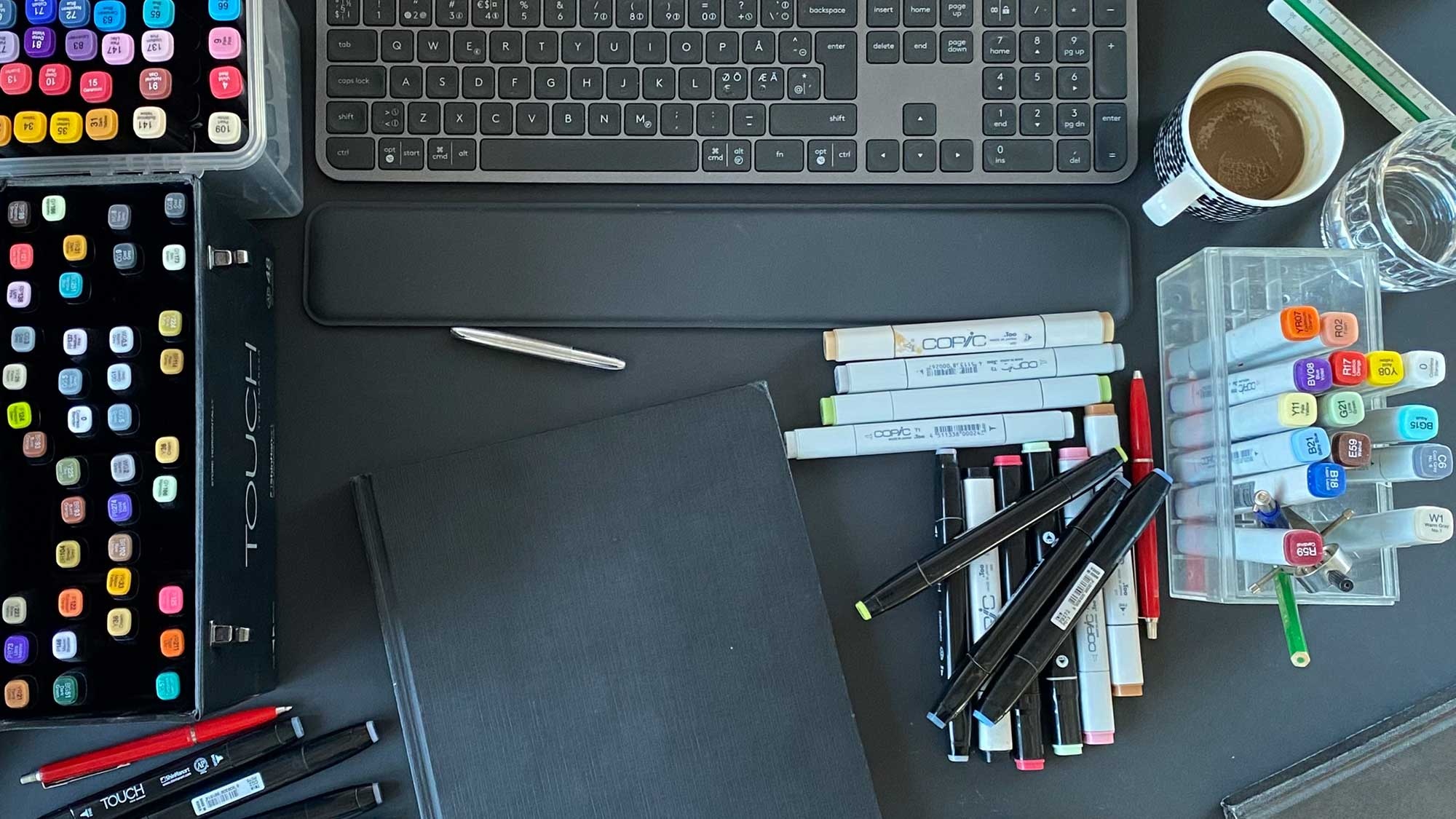
Projects are developed through a combination of sketching, physical modelling and digital tools, moving between hand and industry. Early ideas are tested in material through clay, foam and full-scale prototypes, while digital models and 3D development are used to refine geometry, construction and production.
A central part of the process is understanding production. What is possible, where the limits are, and how they can be challenged. Instead of applying form onto a solution, the design often grows directly from material, process and constraint.
Many projects are developed as systems rather than singular objects. By working with repeatable elements, it becomes possible to create flexible structures that can adapt over time and across different contexts.
Despite working with industrial production, the process remains rooted in a craftsman’s mindset. Attention to detail, proportion and material is central, from the first sketch to the final product.


Background
Stefan Borselius is trained both as a cabinetmaker and as a designer, with a total of eleven years of education in woodworking and furniture design. He completed his early training in traditional craftsmanship at Steneby, before continuing with studies at Malmsten and Konstfack in Stockholm.
The studio works with a small, focused team. In addition to Stefan Borselius, the practice includes Klas Linderheim, industrial designer, and Madelene Borselius, trained textile seamstress. Together, the studio combines knowledge of product development, materials and textile understanding.
Since its founding, the studio has worked with a range of Scandinavian and international manufacturers, often in long-term collaborations. Projects are typically developed in close dialogue with industry, where design, engineering and production are considered as one.
The work has received several international awards, including the Red Dot Award — Best of the Best, German Design Award, Interior Design Best of Year and NYCxDesign Awards. Stefan Borselius was also awarded Guldstolen and named Designer of the Year by Form. Selected works are represented in the collection of the Swedish Nationalmuseum in Stockholm.


Origin
I never met my great grandfather, and barely knew my grandfather. Still, they have had a strong influence on my work. What connects us is a large oak cabinet that stood in my childhood home. It was made for the Baltic Exhibition in Malmö in 1914, and one of the few pieces saved from my great grandfather’s carpentry workshop. My grandfather later ran H. N. Nordén’s carpentry and furniture store. Over time, the cabinet became more than just a piece of furniture. It became a point of reference.
Both my great grandfather and grandfather were cabinet-makers, and I later followed the same path. I trained in woodworking in Malmö, beginning the same education as my grandfather had taken decades earlier, and completed my journeyman’s test almost exactly 100 years after my great grandfather. At the same time, another influence came from a different direction. My uncle, Ralf Borselius, had studied at Konstfack before me and later became a professional artist. Through him, I encountered a different way of thinking, where form, colour and expression were as important as making.
The reason I became a designer is not only heritage, but also environment. The things that surrounded me created an interest and showed me what was possible. At the same time, to reduce this to inheritance would be misleading. It depends just as much on education and work. I never became a cabinet maker like my forefathers. And to be honest, they were not designers, even if they sometimes designed their own furniture.
For me, design is something else. It is about questioning how things look, how they are used and how they are produced. That combination shaped how I work today. The understanding of material, construction and detail comes from craftsmanship, while the move into design added questions of use, production and context. Without that piece of furniture, my work would probably not exist.
