AIR
Air redefines how space can be structured without being enclosed. At a time when acoustic elements were fixed to walls or floors, I developed a system that could hang freely in space, acting as both divider and sound diffuser.
Developed through experiments with formed felt, the system is built from repeatable elements that connect into larger structures. Space is organised through pattern, density and direction rather than solid boundaries, and defined as much by the elements as by the spaces in between them.
The elements shift in depth, breaking and scattering sound while maintaining openness.

AIRFLAKE - BLADE
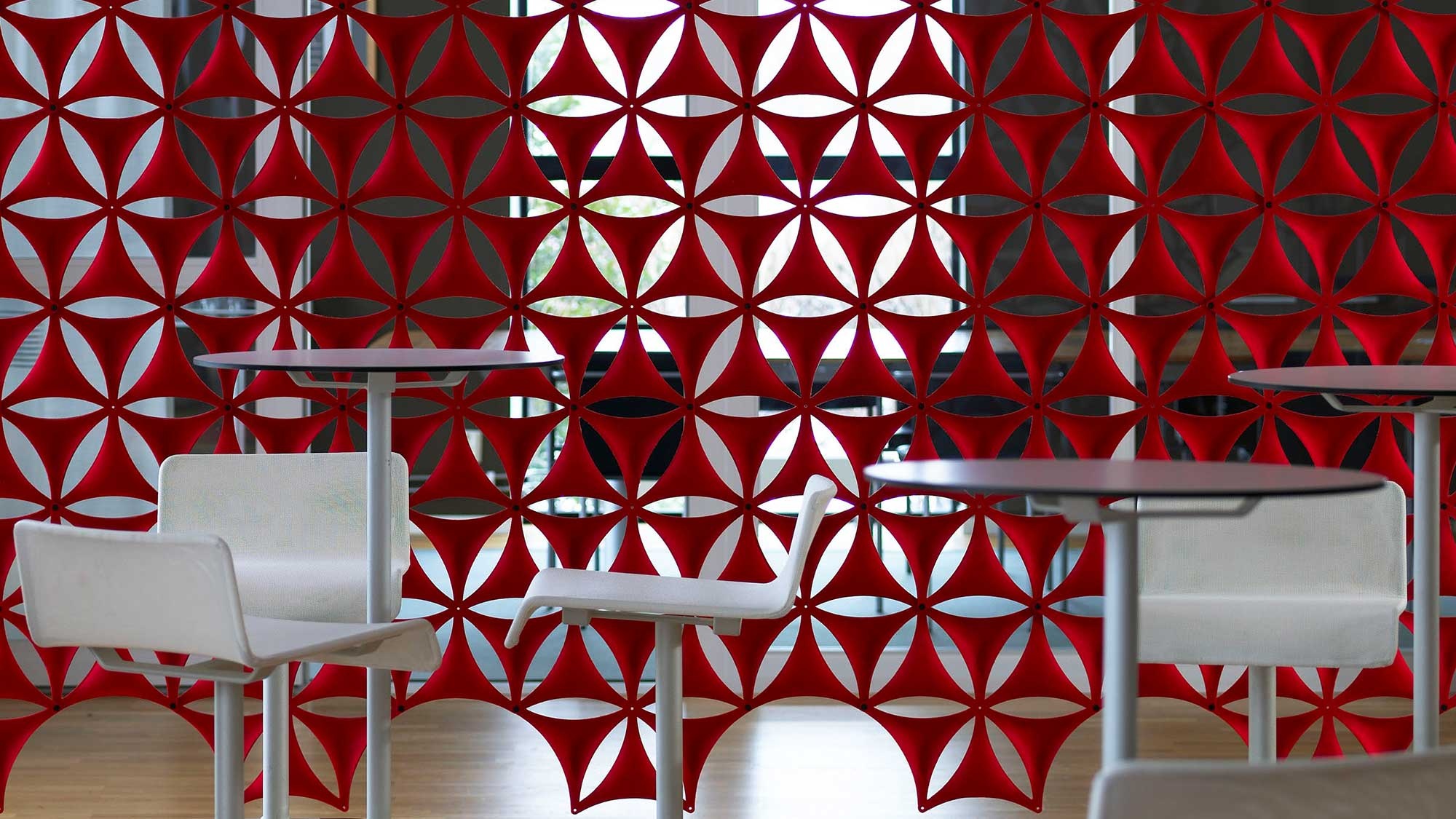
AIRFLAKE was the first expression of the Air system, built around a modular unit that expands into larger structures.
AIRFLAKE BLADE is based on an interplay of circular forms, where each unit connects into the next to create a continuous structure. The pattern builds through repetition, forming a dense and articulated surface.
Early studies explored triangular constructions, but this led to complex connections and too many joints. By grouping the elements into six interconnected parts, I established the hexagonal unit that simplified both assembly and structure.
The geometry allows the system to grow in multiple directions while maintaining clarity. Depending on spacing, Blade can shift from open formations to denser structures that define space more distinctly.


AIRFLAKE - LINE
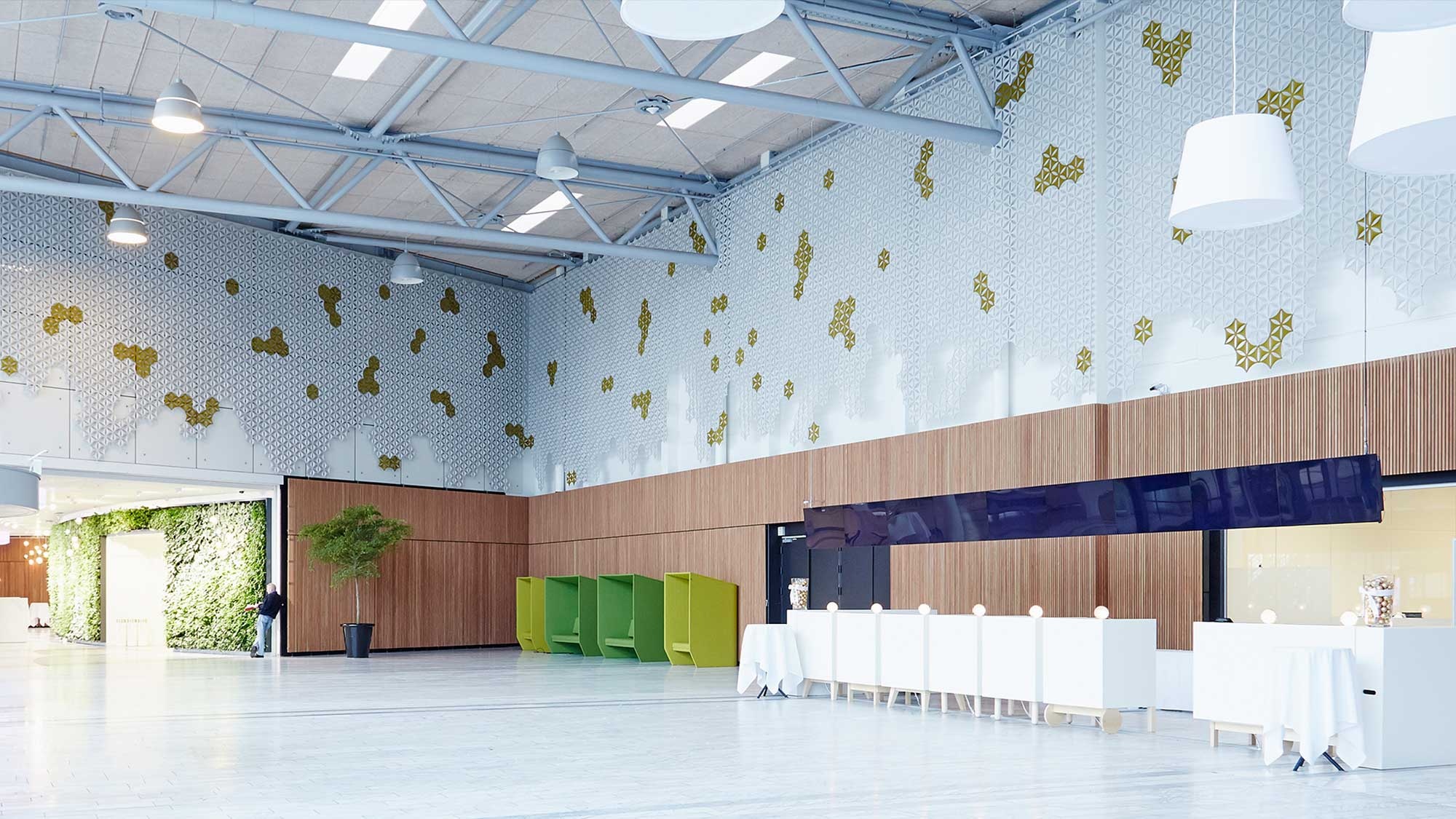
LINE develops the AIRFLAKE system through a more open and linear expression. The elements are designed to hang freely in space, forming light, transparent divisions rather than solid walls.
The pattern is based on a study of circles and their relationships, combining smaller and larger radii to create variation and rhythm. By adjusting spacing and scale, the system can shift from more defined boundaries to almost transparent layers.
AIRFLAKE can be arranged in rows, clusters or larger fields, following straight or curved lines, or mounted against a wall where the pattern becomes more graphic.


AIR - AIRNEWS
AIRNEWS extends the Air system by integrating function directly into the AIRFLAKE structure. Developed as a magazine holder, it uses the same modular logic, allowing it to be incorporated seamlessly into larger configurations.
The formed felt elements create pockets within the pattern, making it possible to store magazines without adding separate components. The function becomes part of the surface rather than something applied to it.
I also developed a dedicated aluminium rail to support the system, allowing AIRFLAKE and AIRNEWS to be suspended in continuous lines, straight or curved, and to define spaces within larger interiors.



AIR - AIRCONE
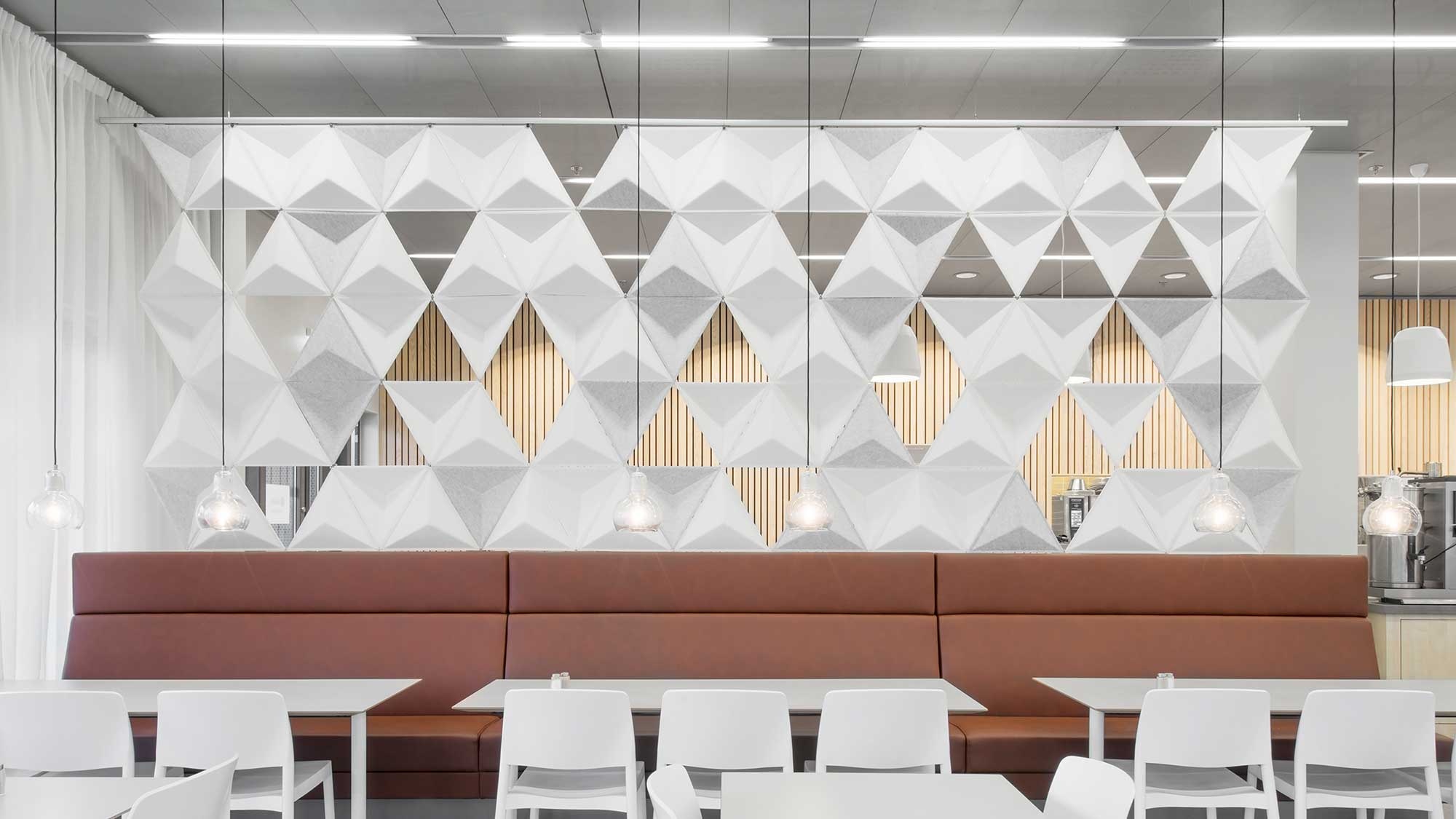
AIRCONE develops the Air system towards a more geometric and structured expression. While AIRFLAKE is based on circular forms, AIRCONE works with straight lines and triangular geometry.
The unit is built from an equilateral triangle that folds into a shallow pyramid, creating a clear front and direction. By alternating the orientation of the elements, the surface can remain planar or develop a more articulated and spatial structure.
I developed a dedicated transparent connector specifically for AIRCONE, reducing build-up and keeping the structure visually light while allowing the elements to be combined into larger configurations.
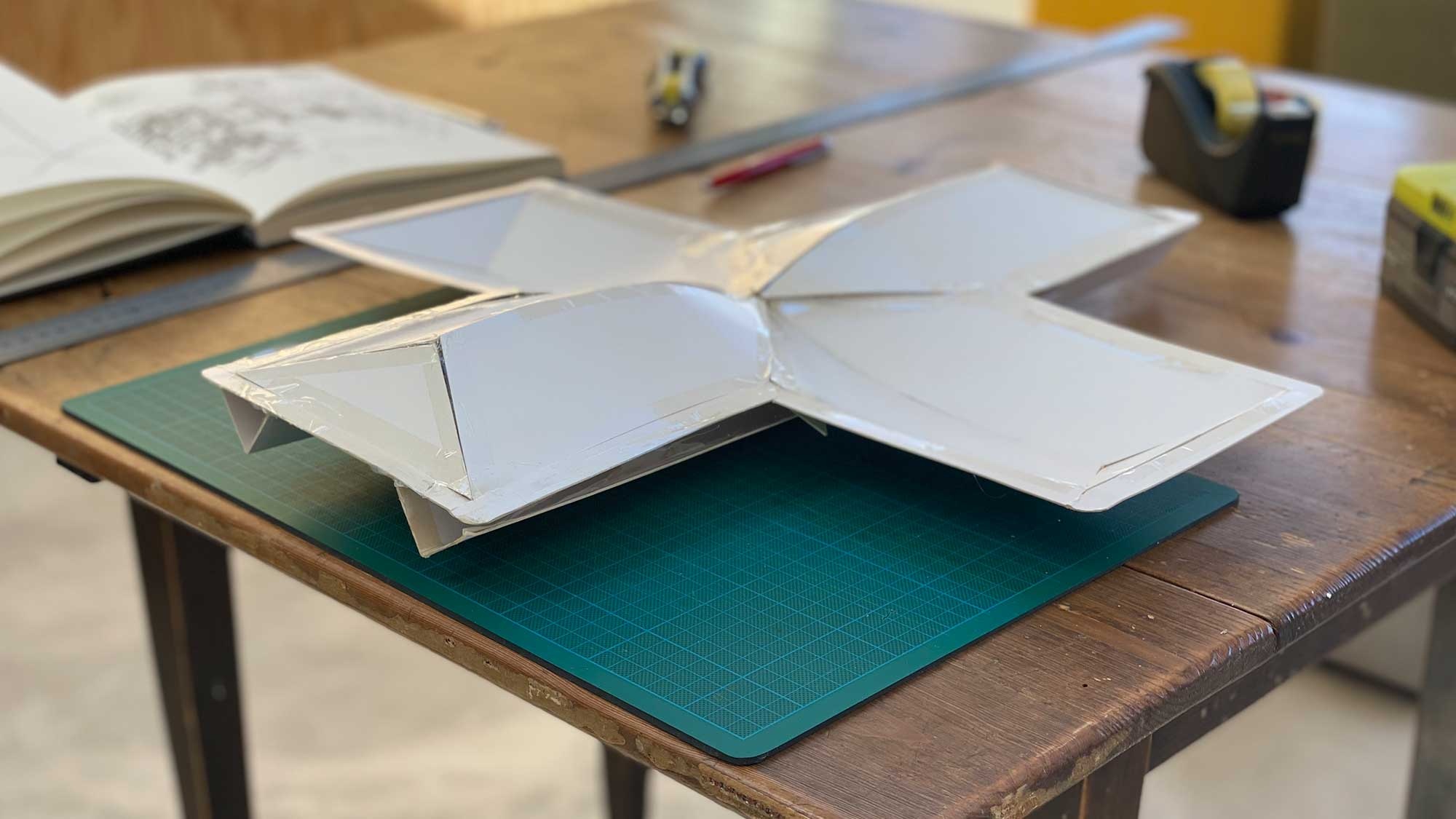
Prototype in paper and fabric-covered cardboard.




AIR - AIRBLOOM
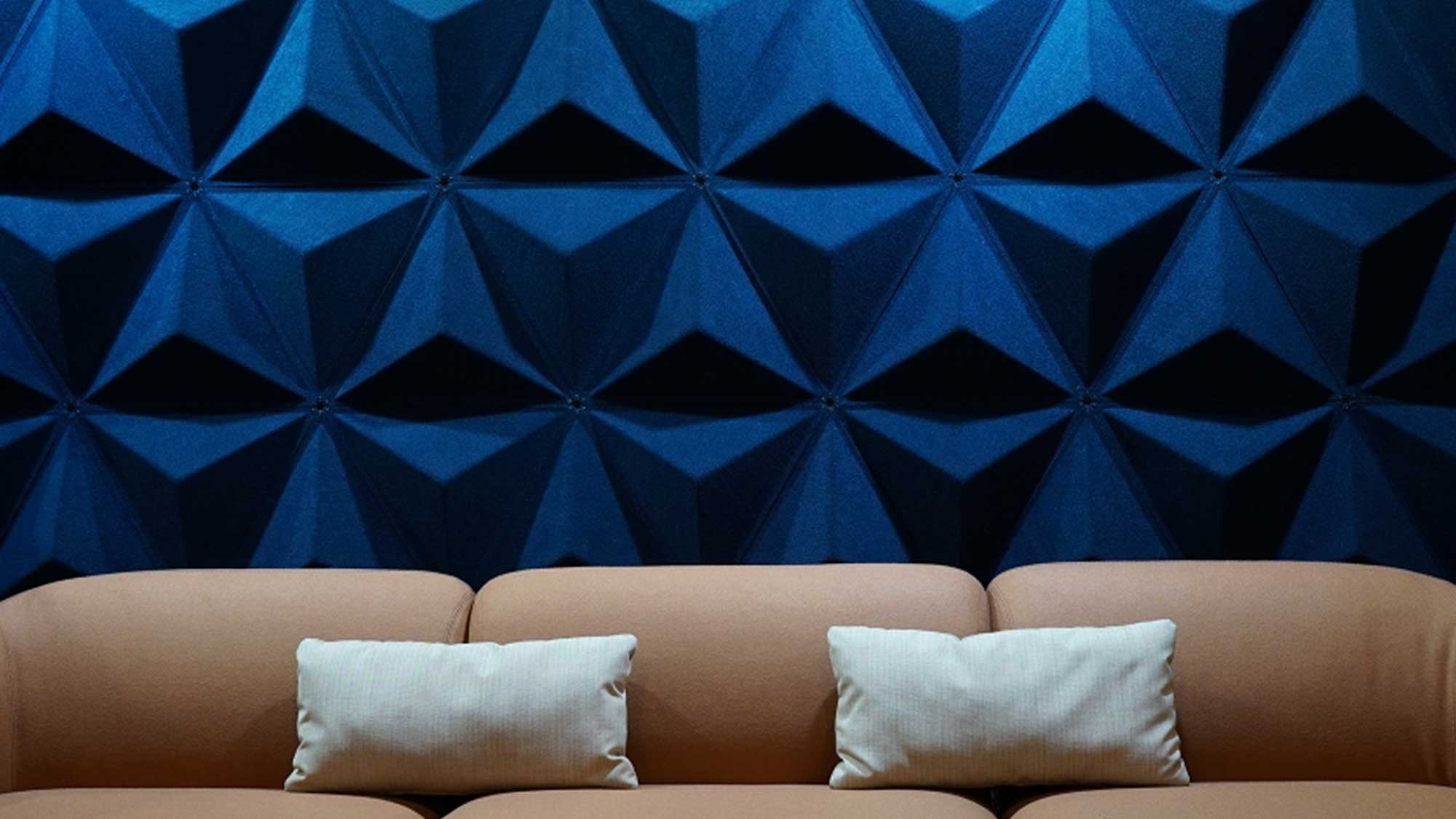
AIRBLOOM develops the system through overlapping forms. While earlier elements connect edge to edge, AIRBLOOM allows the units to partially cover each other, creating a more layered structure. The element is also slightly larger in scale, giving the system a calmer presence.
The relationship between convex and concave surfaces is central. When combined, the elements can interlock or separate, forming patterns of varying density that affect both the visual expression and the acoustic performance.
Depending on how the elements are arranged, the system can shift between tighter formations and more open compositions, where overlapping creates depth and variation in light.


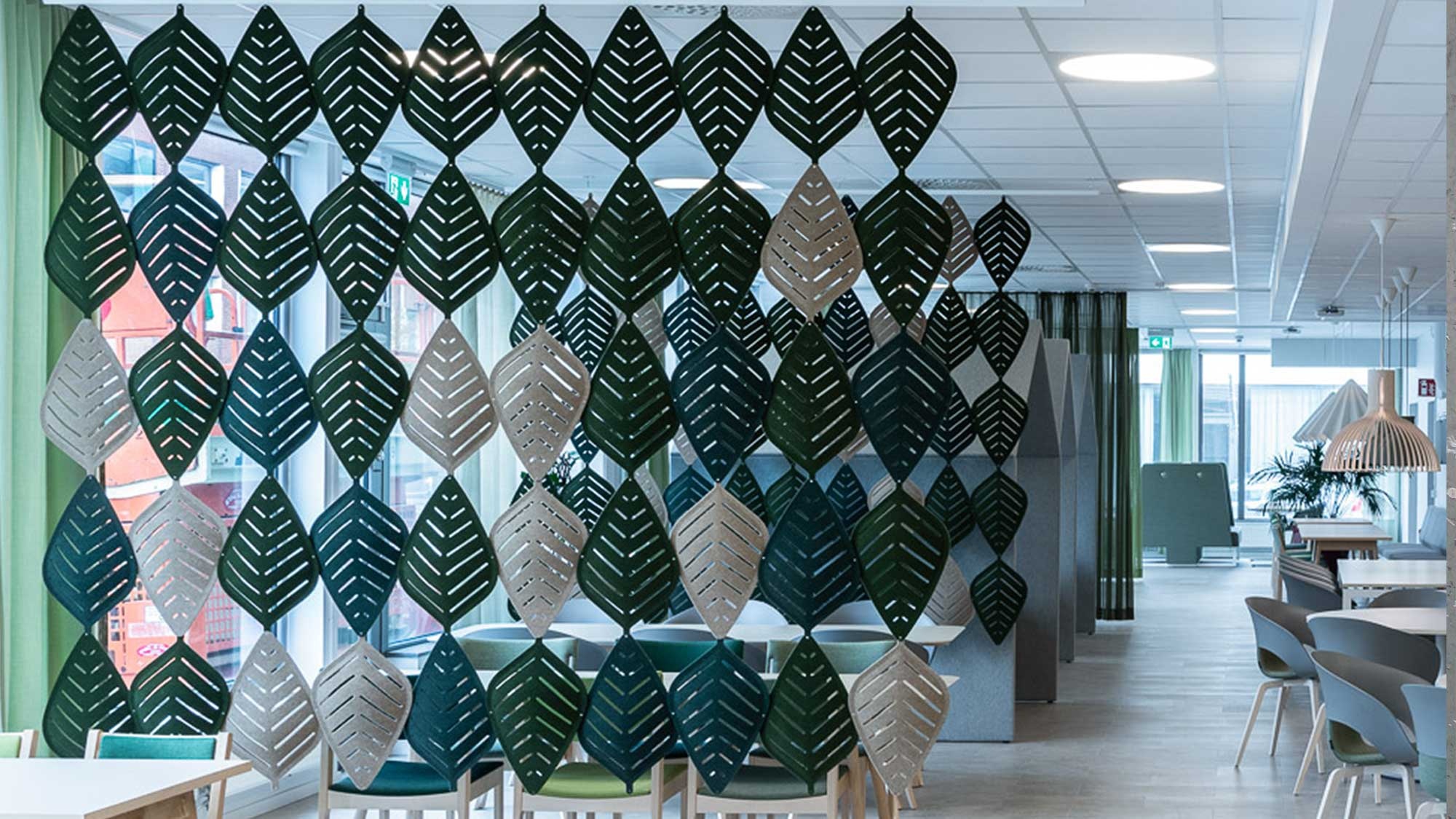

AIR - AIRLEAF
AIRLEAF expands the system towards a more open and interpretative expression. While earlier elements are based on strict geometries, AIRLEAF introduces a softer and more suggestive form.
The unit is built around a diamond structure, allowing it to connect in multiple directions. This makes it possible to work both with controlled patterns and more irregular compositions.
The element can be oriented in different ways, with convex or concave surfaces facing forward, creating variation in depth and movement. Depending on how it is assembled, AIRLEAF can form dense surfaces or more open configurations.


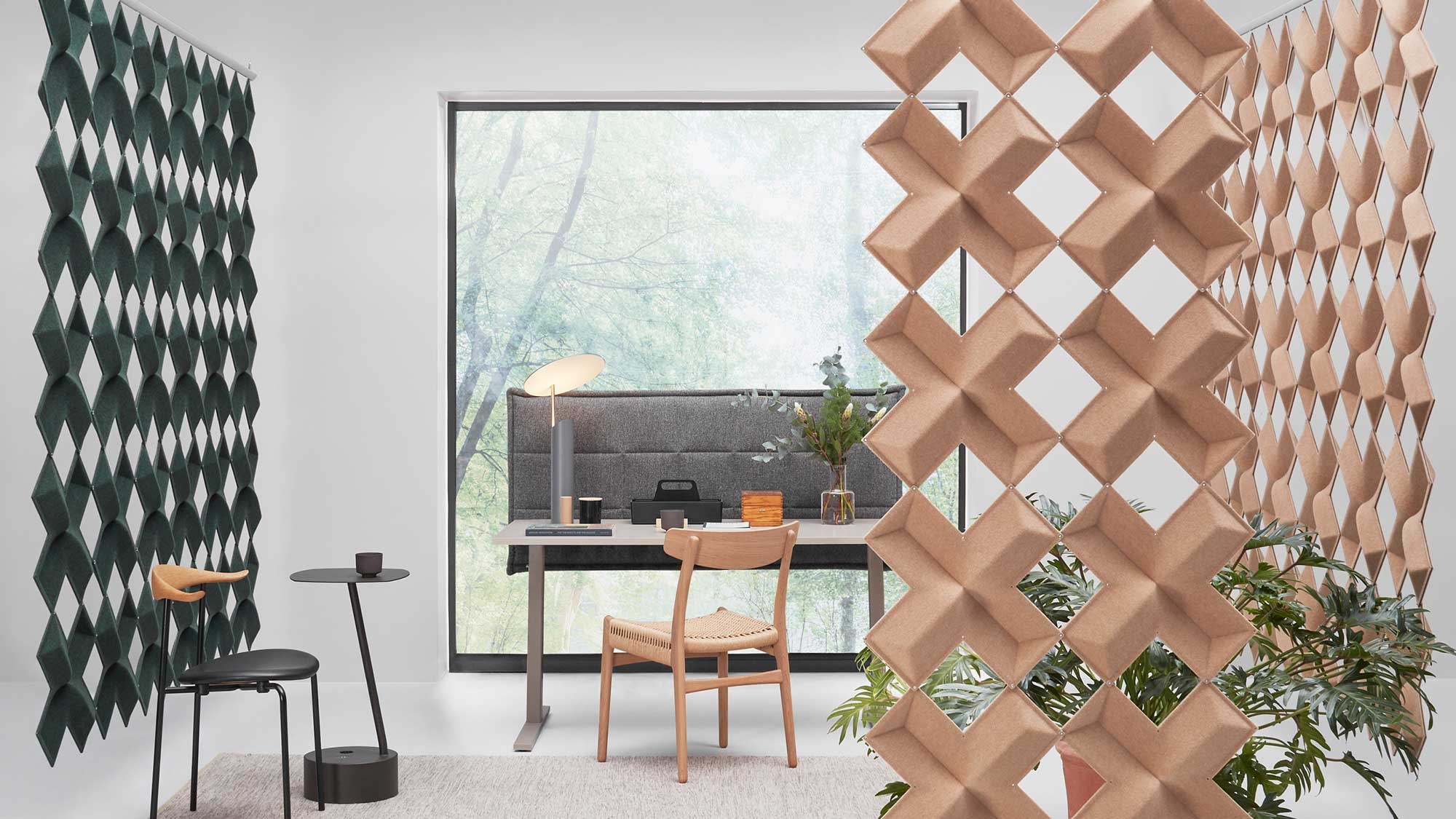

AIR - AIR-X
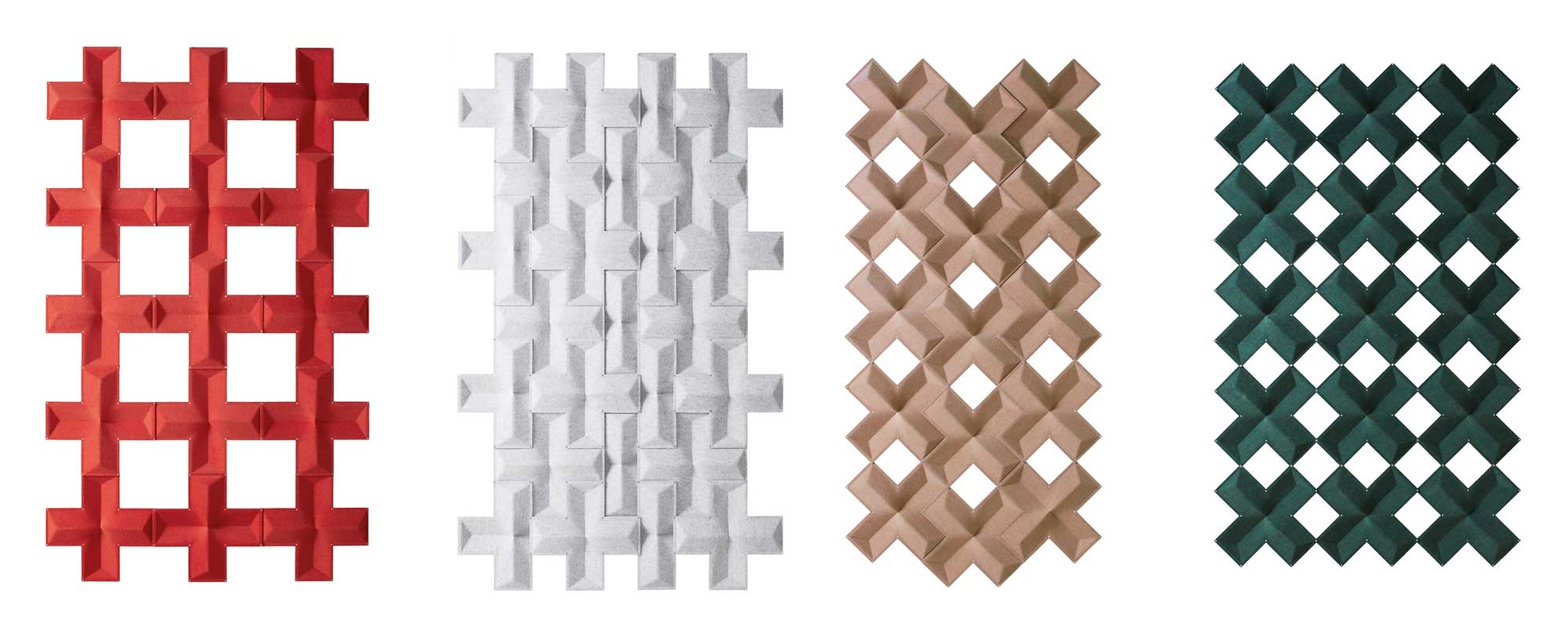
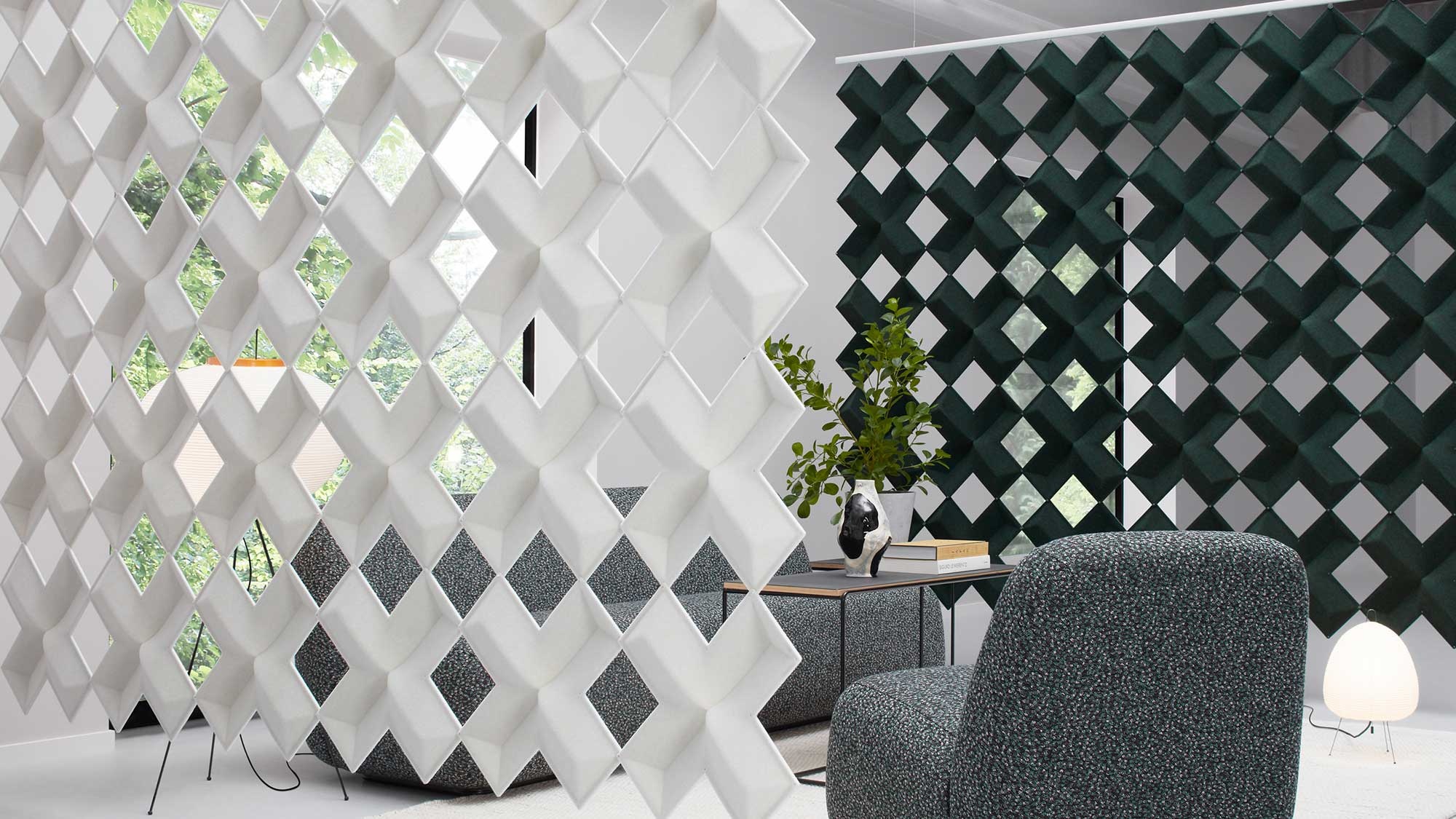
AIR-X develops the system towards a more defined and architectural expression. Based on a cross-shaped element, the structure forms a clear grid of squares, introducing a more ordered and geometric language.
In contrast to the more organic variations within the series, AIR-X is built on repetition and alignment. Convex and concave surfaces alternate, giving the grid depth and controlled variation.
The system can be assembled as a flat plane or configured with overlapping elements, creating a more layered structure with small compartments within the grid.
AIR-X shifts the focus from form to structure, using a clear grid to organise space.


Project start : 2006
Launch year: 2007
Design: Stefan Borselius
Manufacturer: Abstracta