
STING
STING began with an interest in extruded aluminium and its potential beyond conventional applications. Instead of starting with form, we began with a question about production:
What is actually possible to extrude?
Working directly with the limits of the process, the profiles were developed to operate at its very edge. The maximum width of the tool was theoretically 400 mm — a limit that had never been tested in practice. We pushed the profile to 399 mm.
From this, a second idea emerged: could a chair be produced as a continuous length, like a salami, and then cut into parts?
The seat and back were developed as continuous aluminium profiles, extruded in lengths of up to 60 metres before being cut down into individual components. The design was shaped in parallel with the production process, rather than adapted to it afterwards.


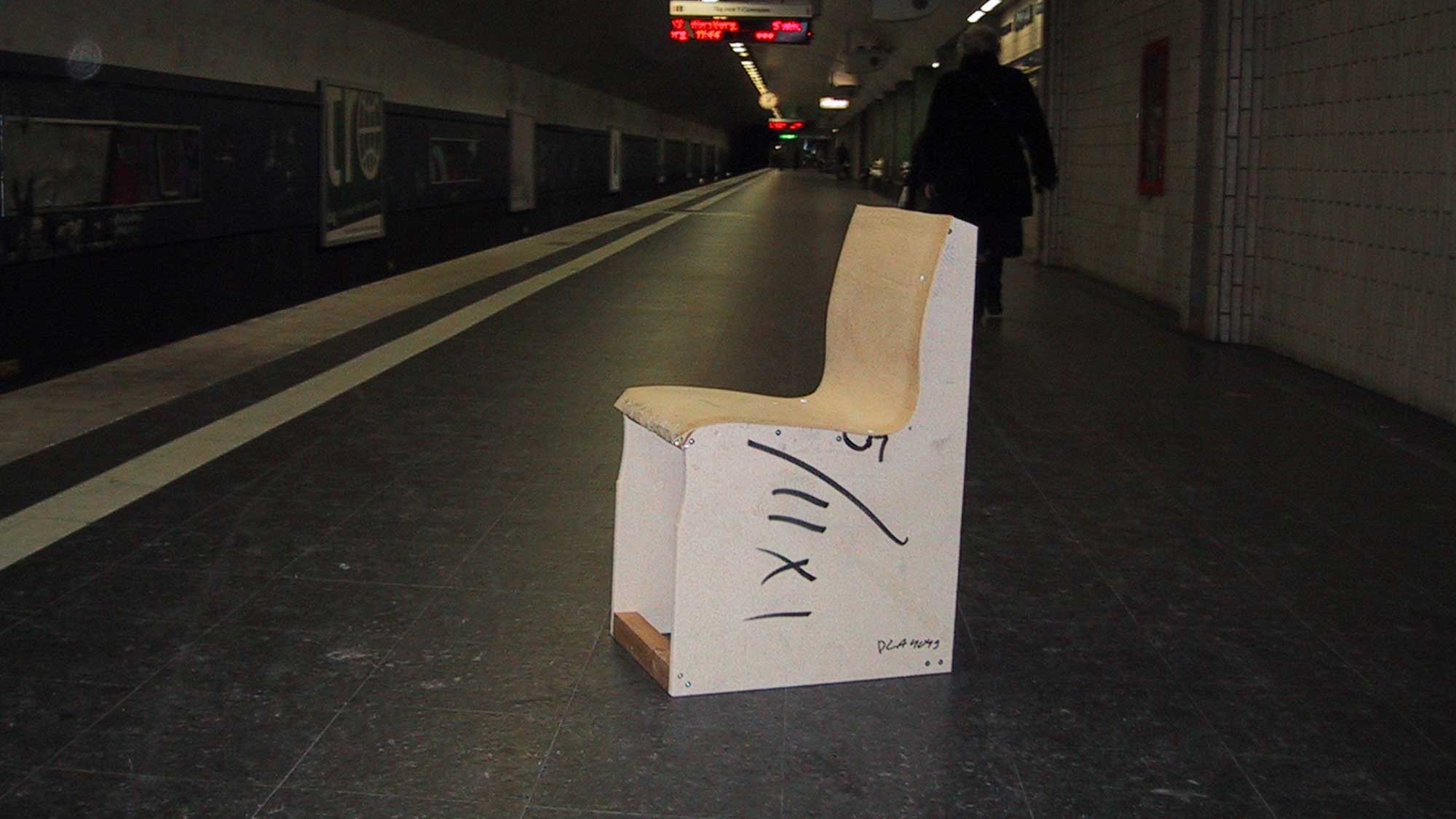
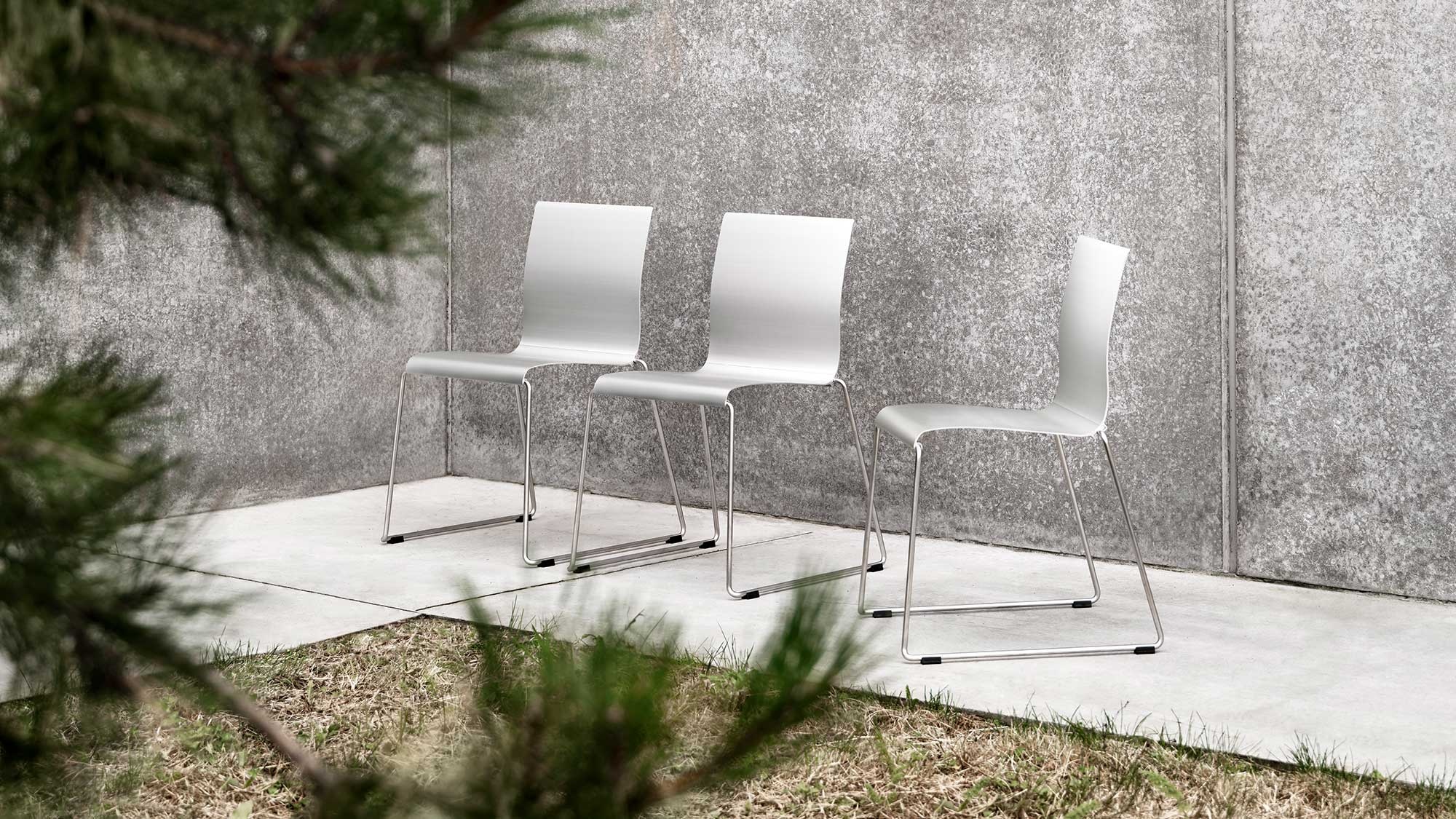


The connection between seat and back draws from a background in cabinetmaking, translated into metal and industrial production. A single component locks the profiles together to form a complete structure.
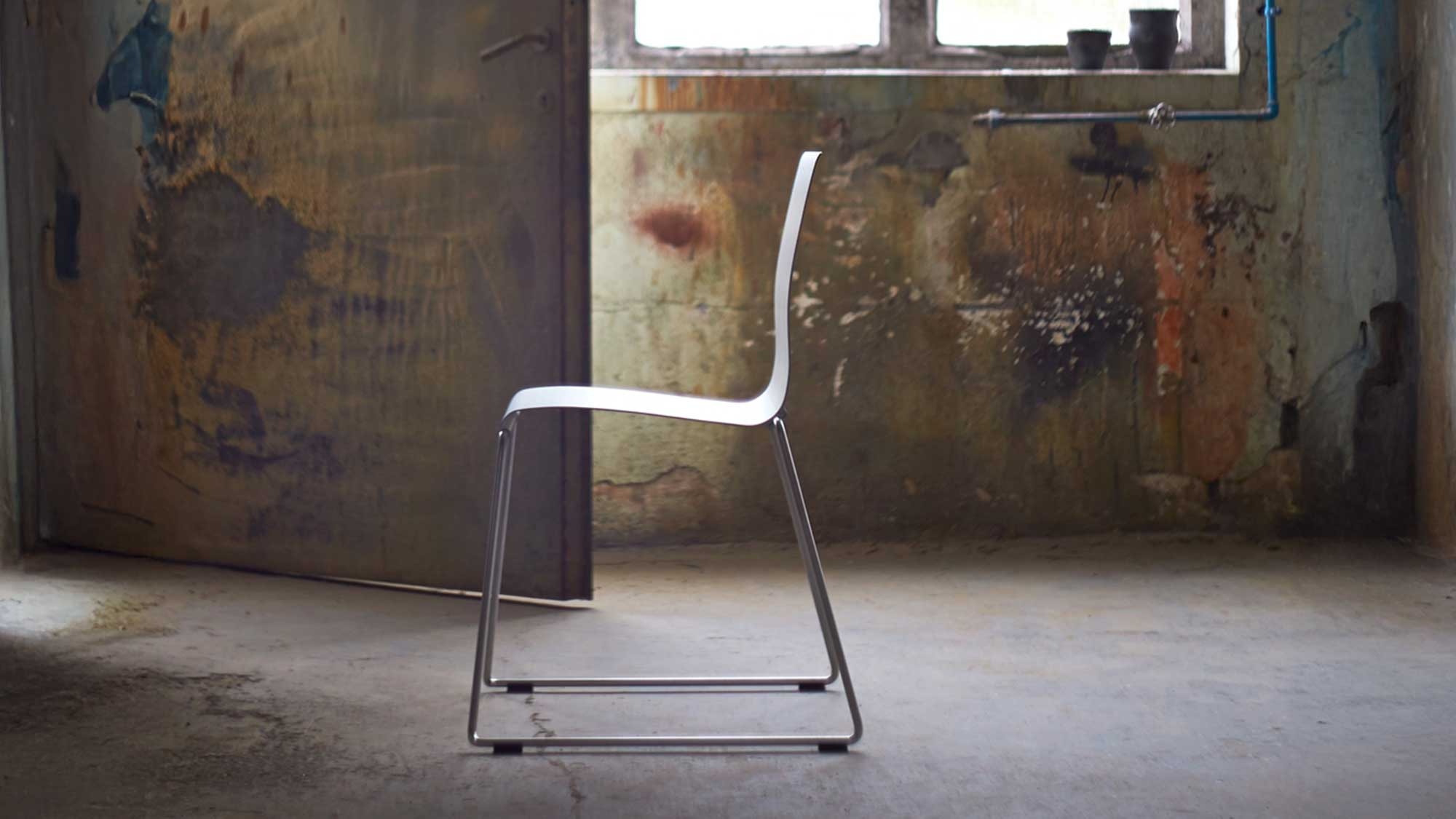
As the system became clearer, the chair was reduced to its essentials. Two aluminium profiles and a stainless steel frame define both structure and expression, without additional elements to stabilise or conceal the construction.
The material allows very thin dimensions, giving the chair a distinct profile and a controlled flexibility in the seat.
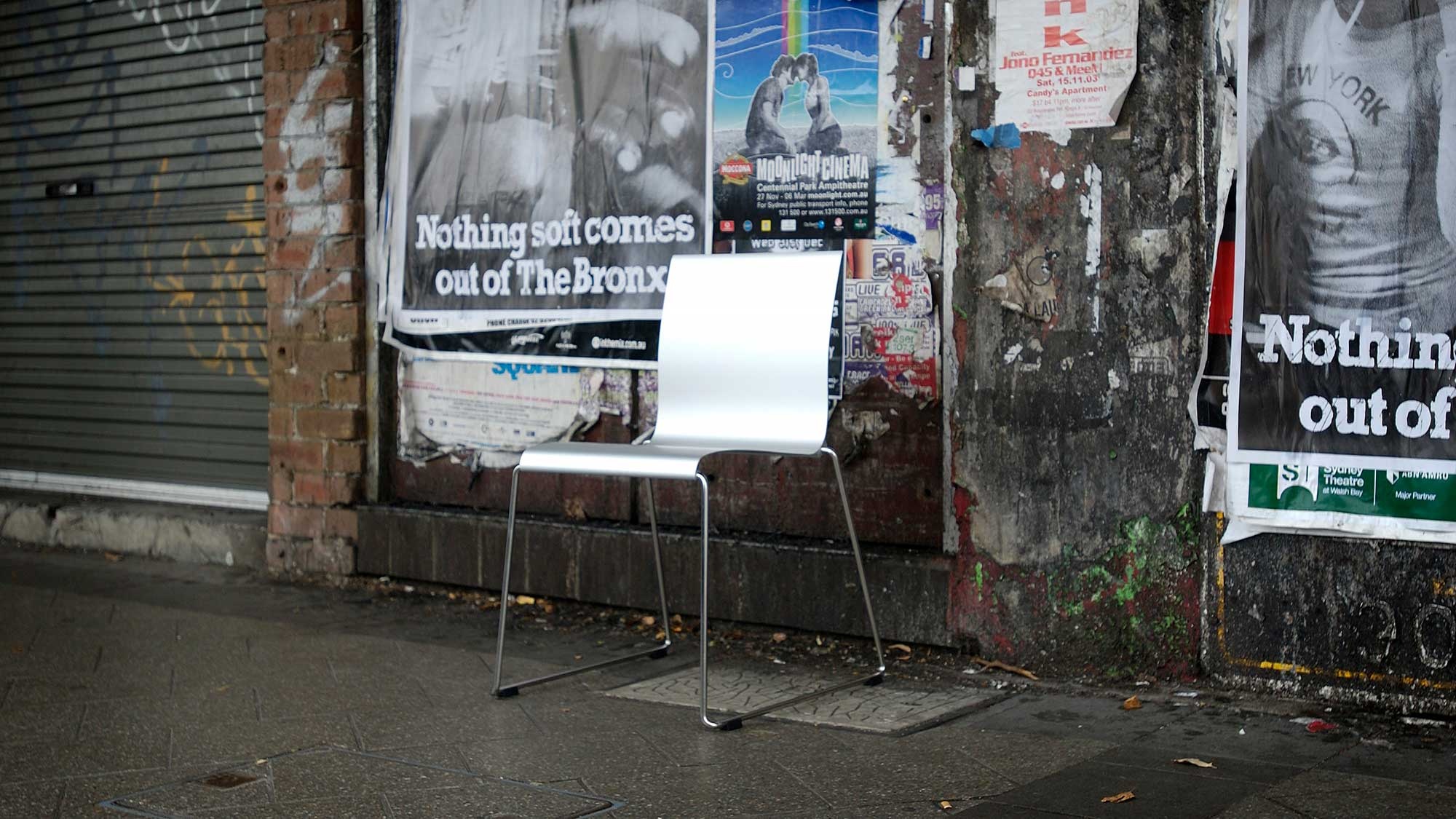
The result is a chair defined by its material and the logic of its making — thin, lightweight and precise, yet robust and suitable for both indoor and outdoor use.


STING - Details
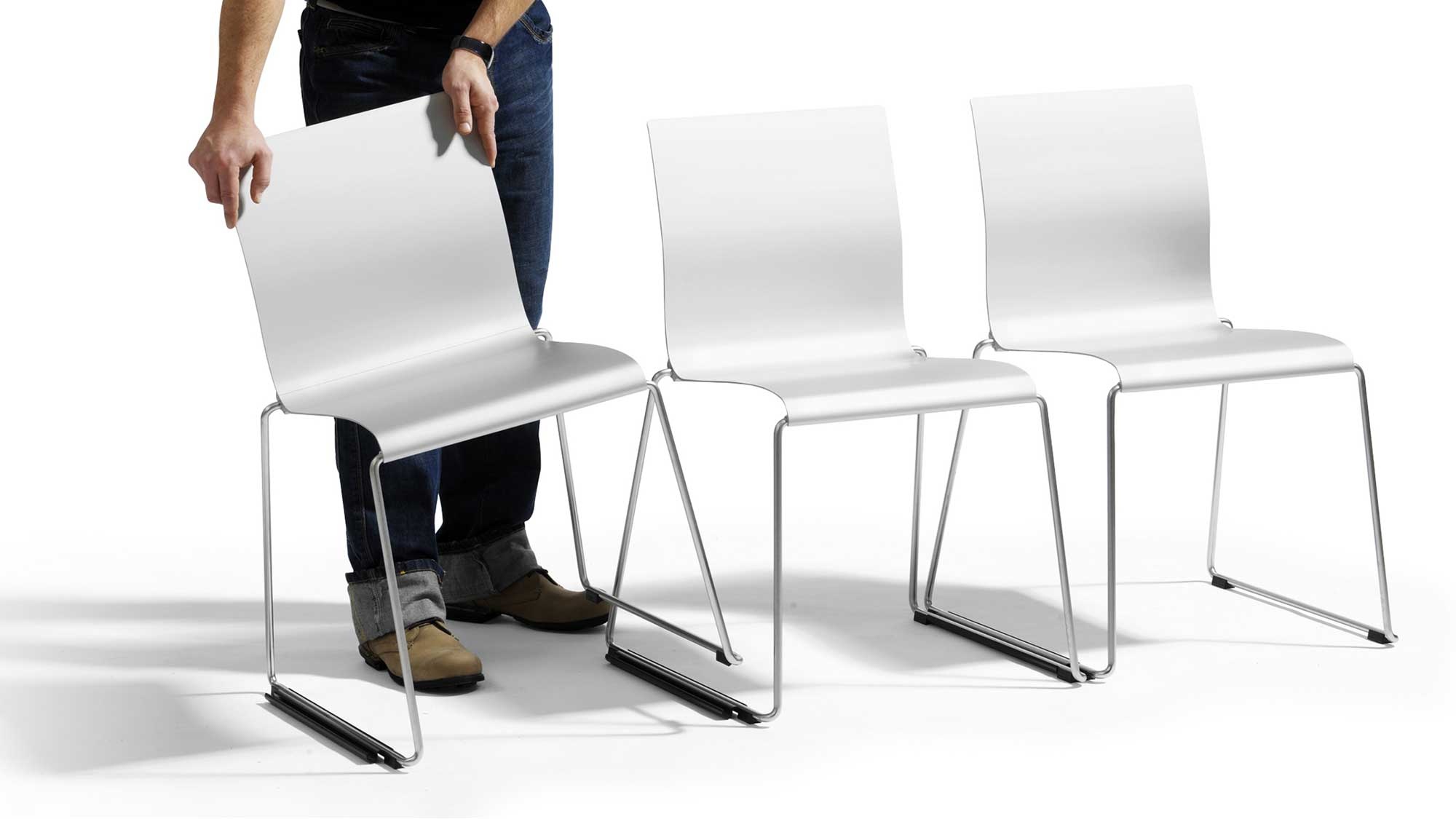
The thin profile of the chair also enables efficient stacking. Each chair adds only 15 mm, allowing large numbers to be stored in a compact volume.
To achieve this, a custom foot was developed with a recessed underside, minimising build-up while guiding the frame into position when stacking.
The same logic extends across the system. Add-ons such as writing tablets, connectors and different seat options in PUR or textile are designed to remain removable while maintaining the same tight stacking dimensions.
The armrest version introduced additional challenges. A custom moulded PUR armrest was developed to fit onto the 12 mm stainless steel frame. The underside is shaped to meet the structure, reducing build-up and creating a tactile grip when lifting the chair.


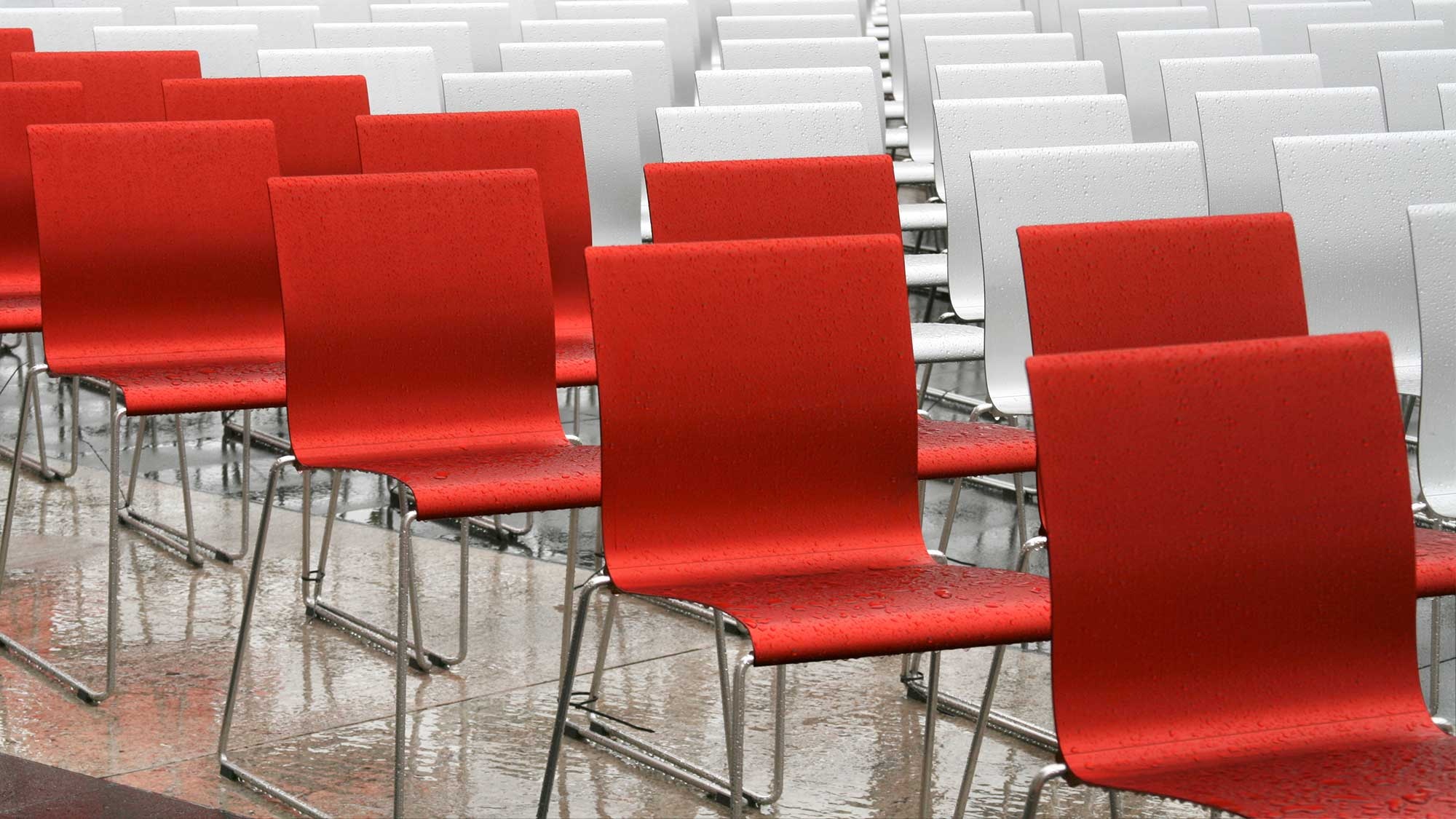
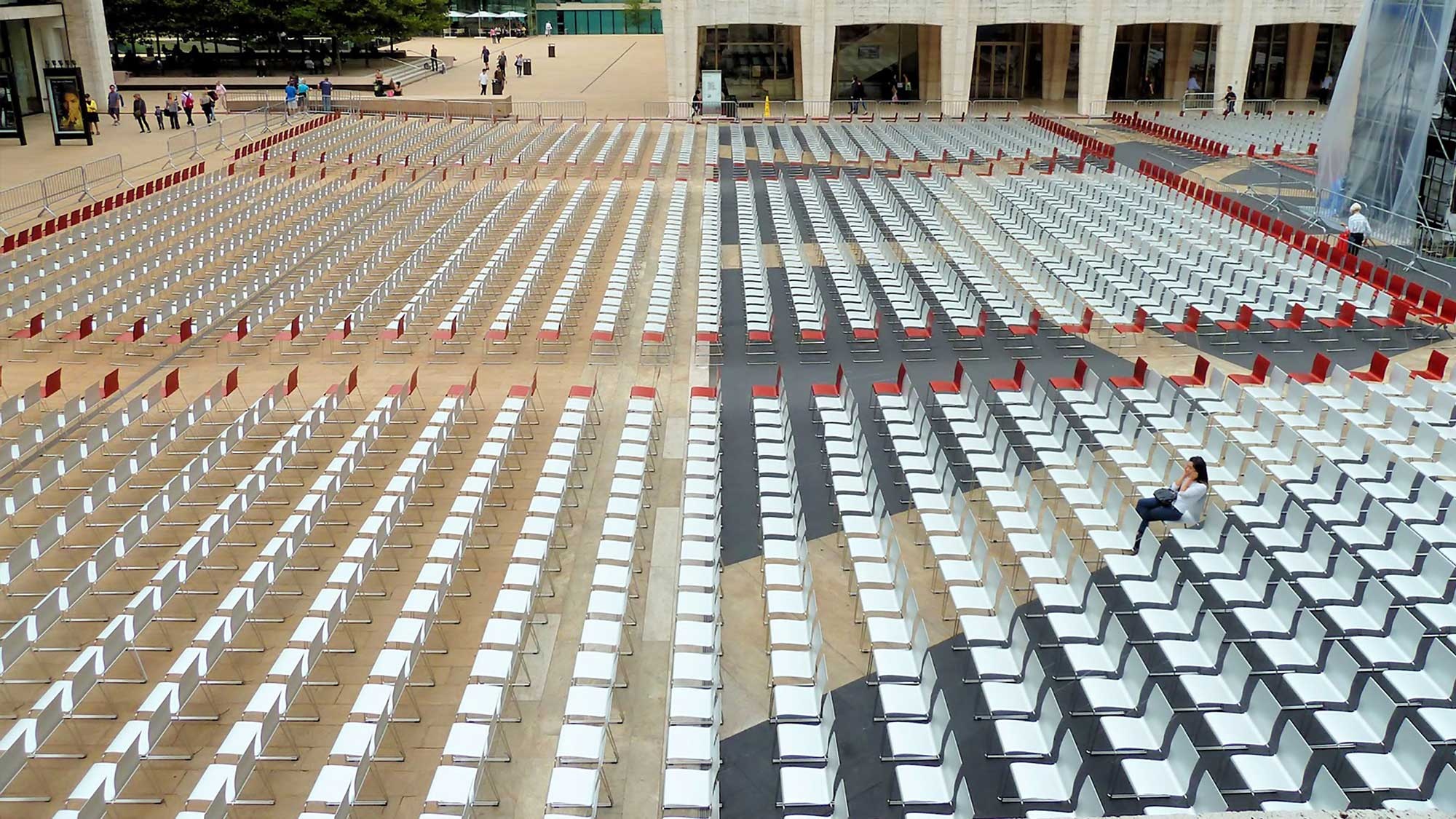




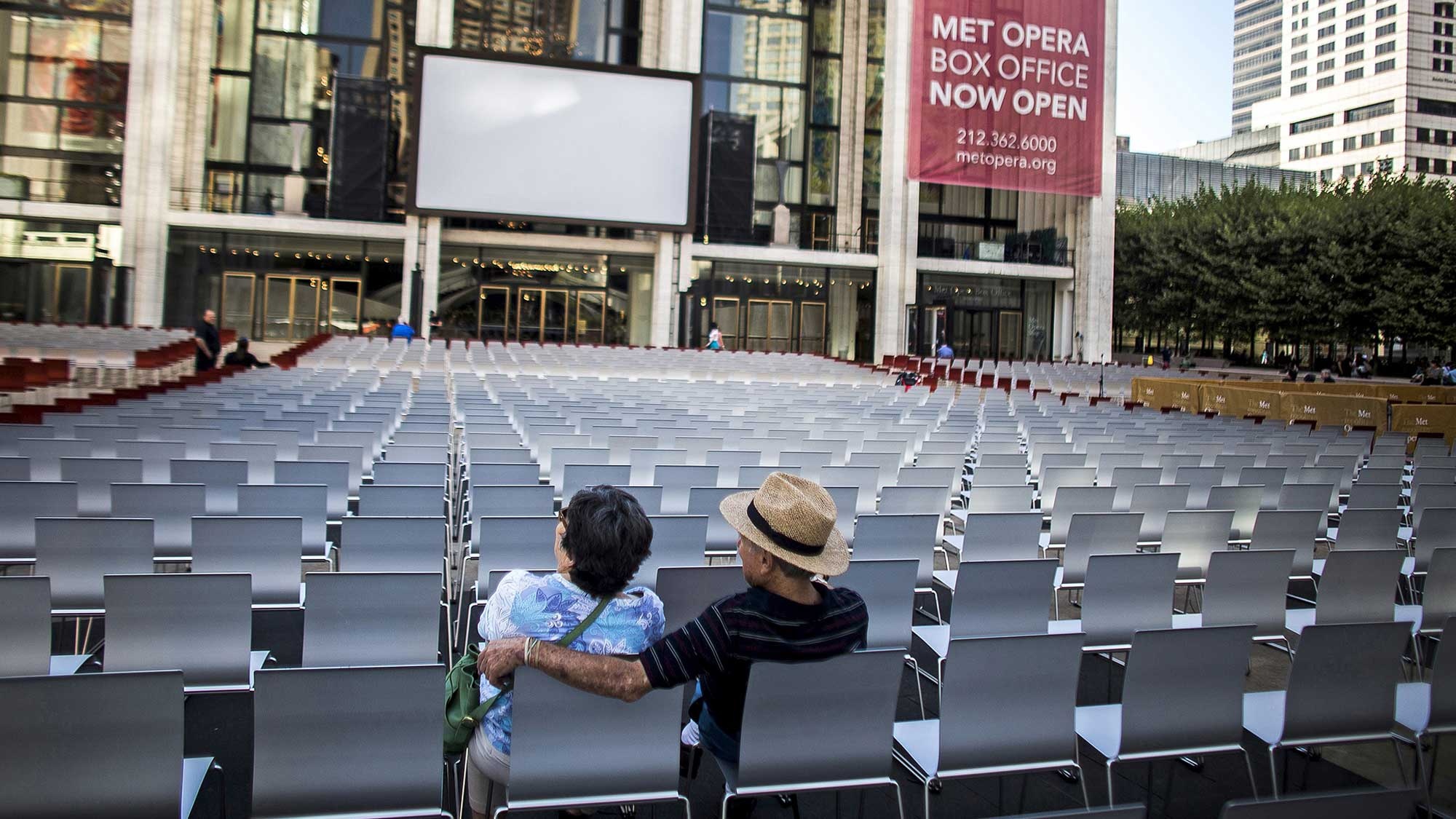
STING has received several international awards, including the Red Dot Award — Best of the Best, the Swedish Design Award Guldstolen, and was named Furniture of the Year by Sköna Hem. The chair is also represented in the collection of the Swedish Nationalmuseum in Stockholm, and has been used in a range of international environments, including installations at Sony’s headquarters, BMW’s headquarters and Lincoln Center in New York.
Project start : 2002
Launch year: 2003
Design: Stefan Borselius & Fredrik Mattson
Manufacturer: Blå Station